



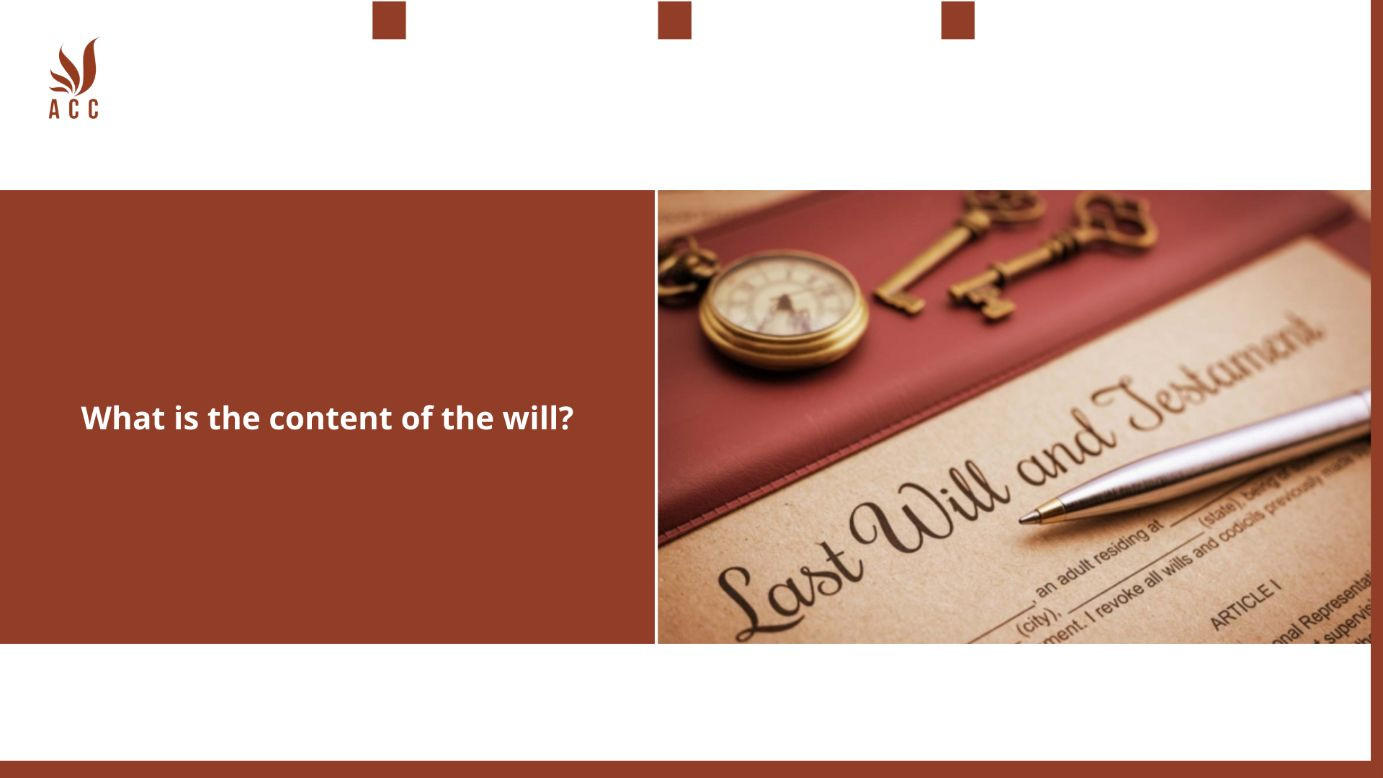
The content of a will, also known as the "will's provisions" or "will's clauses," refers to the specific instructions, statements, and details contained within the document. The content of a will typically outlines how the testator (the person making the will) wishes to distribute their assets, property, and possessions after their death, as well as other important matters related to their estate. Here are the key components commonly found in the content of a will:
1. Identification of the Testator:
The will begins by identifying the testator, including their full name, address, and sometimes additional identifying information.
2. Appointment of Executor:
The testator may appoint an executor, also known as a personal representative, to manage the estate, settle debts, and ensure the will's provisions are carried out.
3. Distribution of Assets:
The central part of the will specifies how the testator's assets will be distributed among beneficiaries or heirs. This section may include specific bequests of property or assets to individuals or organizations.
4. Residuary Clause:
The residuary clause addresses the distribution of any remaining assets not covered by specific bequests. It ensures that all assets are distributed, even if not individually mentioned.
5. Guardianship:
If the testator has minor children, the will may specify who should assume guardianship and provide for their care in the event of the testator's death.
6. When using ACC Law Firm's testament, entrepreneurs will receive
7. Q&a
Q1: What is the content of a will?
A1: The content of a will, also known as the will's provisions or clauses, typically includes the following key elements:
- Identification of the testator (the person making the will).
- Appointment of an executor to manage the estate.
- Instructions for the distribution of assets and property.
- Specific bequests (gifts) to individuals or organizations.
- Nomination of guardians for minor children, if applicable.
- Any conditions or restrictions on inheritances.
- Revocation of prior wills.
- Signatures of the testator and witnesses.
Q2: Can the content of a will be customized to the testator's preferences?
A2: Yes, the content of a will can be highly customized to reflect the testator's specific wishes and preferences. Testators have the flexibility to distribute their assets, name beneficiaries, and include additional instructions or wishes in their wills.
Q3: Are there any legal requirements for the content of a will?
A3: While there is flexibility in drafting the content of a will, there are legal requirements that must be met for a will to be valid. These requirements often relate to the clarity of the document, the presence of necessary clauses (e.g., appointment of an executor), and adherence to local laws governing wills.
Q4: Can the content of a will be changed or updated over time?
A4: Yes, the content of a will can be changed or updated by creating a new will or adding a codicil (an amendment) to the existing will. It is essential to follow legal procedures to ensure that any changes are valid and enforceable. Testators often update their wills to reflect changes in their circumstances, family, or preferences.
Nội dung bài viết:





Bình luận