



Inheritance by will, often simply referred to as "inheritance," is the legal process by which a deceased person's assets and property are distributed to individuals, entities, or organizations according to their last will and testament. Here are the key aspects of inheritance by will:
1. Last Will and Testament:
Inheritance by will begins with the creation of a legal document known as a "last will and testament" or simply a "will." This document outlines the deceased person's wishes regarding the distribution of their assets and property after their death.
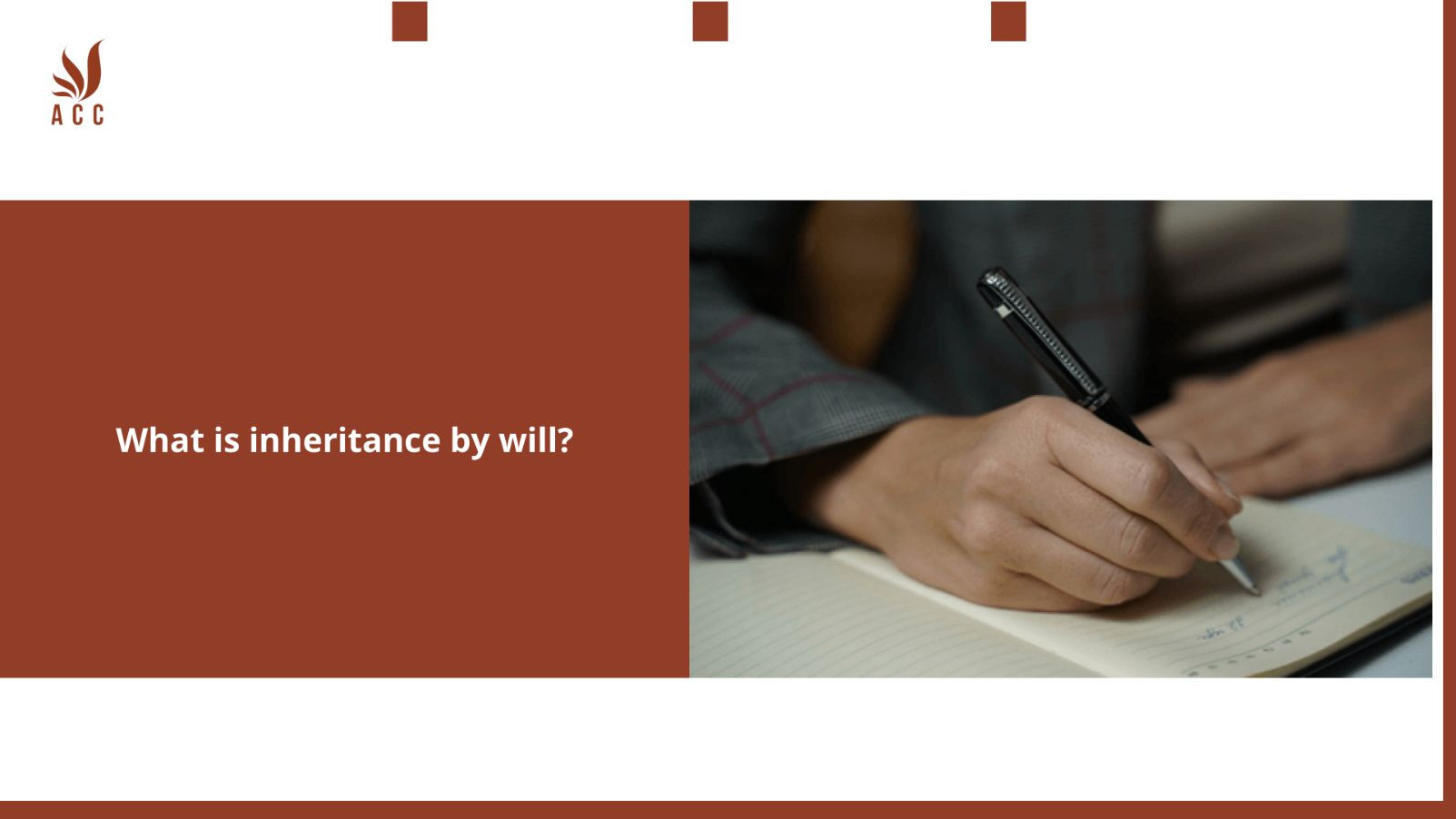
2. Testator:
The person who creates the will is called the "testator." The testator specifies who should receive their assets, how those assets should be distributed, and who should be responsible for administering the estate.
3. Beneficiaries:
Beneficiaries are the individuals, entities, or organizations named in the will who are entitled to inherit a portion of the deceased person's estate. Beneficiaries can include family members, friends, charitable organizations, or any other chosen recipients.
4. Executor or Personal Representative:
The will typically designates an executor or personal representative, often a trusted individual or a professional, who is responsible for carrying out the instructions in the will. This includes inventorying the assets, paying debts and taxes, and distributing assets to the beneficiaries.
5. Probate Process:
After the testator's death, the will is submitted to the probate court in the jurisdiction where the deceased person resided. The probate court oversees the validation of the will, settles any outstanding debts, resolves disputes, and ensures the proper distribution of assets according to the will's instructions.
6. Asset Distribution:
Once the court approves the will and resolves any issues, the executor distributes the assets and property to the beneficiaries according to the terms of the will. This can include real estate, financial accounts, personal belongings, and other assets.
7. Challenges to the Will:
In some cases, interested parties may challenge the validity of the will, alleging factors such as lack of capacity, undue influence, fraud, or improper execution. The court will consider these challenges during the probate process.
8. Intestacy Laws:
If a person dies without a valid will (intestate), the distribution of their assets is determined by the state's intestacy laws, which specify how assets are distributed among legal heirs
9. When using ACC Law Firm's testament, entrepreneurs will receive
When using ACC Law Firm's testament, entrepreneurs will receive professional legal advice and assistance in drafting a comprehensive and legally binding will that reflects their specific business needs and objectives. The testament will ensure the smooth transition of their business assets and help protect their interests and those of their beneficiaries. Additionally, entrepreneurs will have access to ongoing support and guidance from experienced attorneys who specialize in estate planning for entrepreneurs.
10. Q&A
Q1: What is inheritance by will?
A1: Inheritance by will, also known as testamentary inheritance, is a legal process in which a person, referred to as the testator, specifies their wishes for the distribution of their assets, property, and possessions upon their death through a legal document called a will. This will outlines who will inherit the testator's assets, the proportions in which they will inherit, and any specific conditions or instructions regarding the inheritance.
Q2: How does inheritance by will differ from other forms of inheritance?
A2: Inheritance by will differs from other forms of inheritance, such as intestate succession, in that it allows the testator to have full control over how their assets are distributed after their death. Inheritance by will is contingent on the existence of a valid will, while other forms of inheritance are governed by default laws that dictate how assets are distributed when there is no valid will in place.
Q3: What are the key elements of a valid will for the purpose of inheritance by will?
A3: The key elements of a valid will typically include:
- The will must be in writing.
- The testator must be of legal age and have the mental capacity to create a will.
- The testator must sign the will in the presence of witnesses.
- Witnesses usually need to sign the will to attest to its validity.
These elements may vary by jurisdiction, so it's essential to comply with the specific legal requirements in the relevant area.
Q4: Can a person change their will if they wish to modify their inheritance plan?
A4: Yes, a person can change their will if they wish to modify their inheritance plan. They can do so by creating a new will or by adding a codicil, which is an amendment to an existing will. Making changes to a will is a common practice to reflect changing circumstances or intentions, provided that the changes comply with legal requirements.
Nội dung bài viết:





Bình luận