



An "inheritance" and a "will" are related concepts in the context of estate planning and the transfer of assets and property after an individual's death. Let's define each term:
I. Inheritance:
An "inheritance" refers to the assets, property, possessions, and financial benefits that a person receives from the estate of a deceased individual. Inheritances typically pass from the deceased (the decedent) to beneficiaries, heirs, or legatees according to a legal process and, often, the instructions specified in the decedent's will or determined by laws of intestacy.
Inheritance can include a wide range of assets, such as real estate, money, investments, personal belongings, vehicles, and more. The specific assets inherited depend on the decedent's estate and their wishes as expressed in a will or, in the absence of a will, the laws of intestacy.
II. Will (Last Will and Testament):
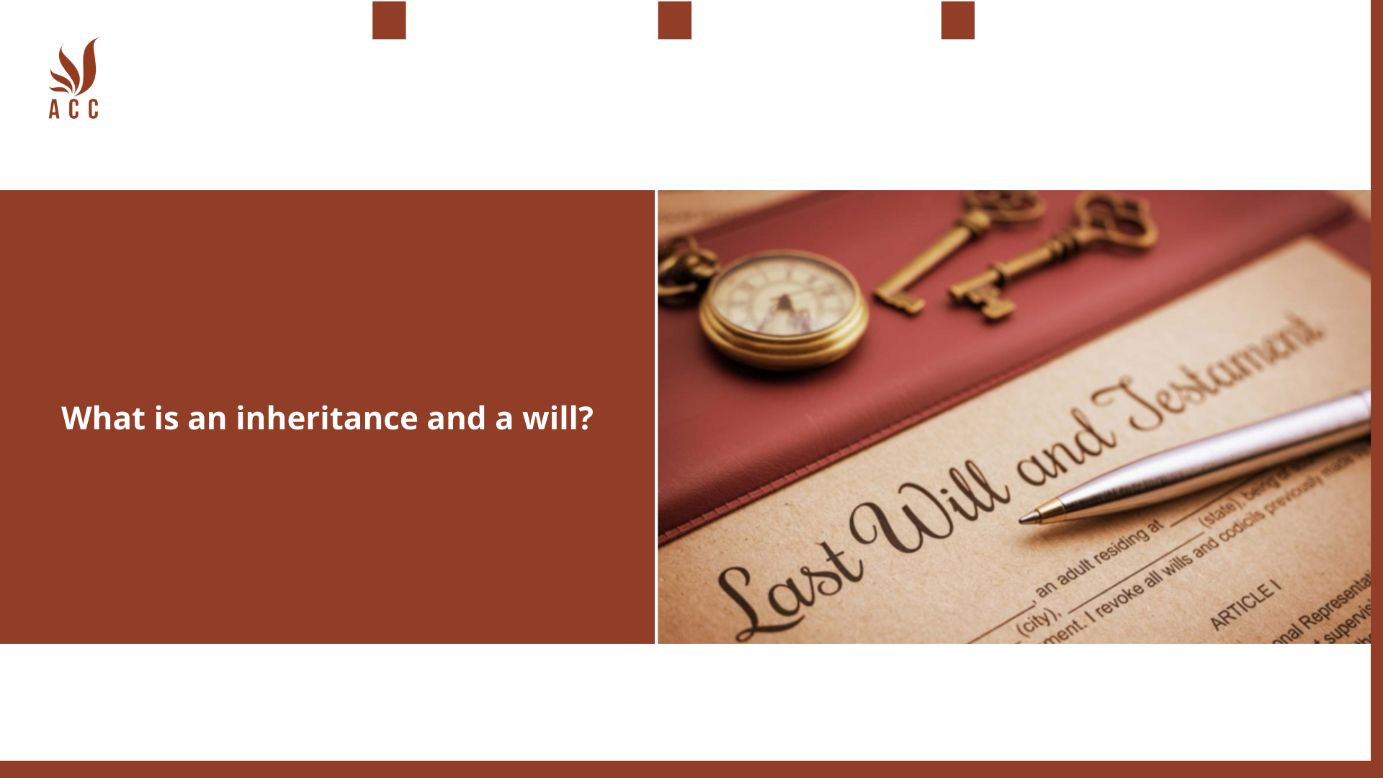
A "will" or "last will and testament" is a formal legal document created by an individual (the testator) during their lifetime to specify how they want their assets and property to be distributed after their death.
A will outlines the testator's wishes regarding the inheritance of their assets, designates beneficiaries who will receive specific portions of the estate, and often appoints an executor responsible for administering the estate and ensuring the will's provisions are carried out.
In addition to property distribution, a will can address other matters, such as guardianship for minor children, funeral and burial preferences, and debt settlement.
The will serves as a legally binding document that provides clear instructions for the distribution of assets, helping ensure that the testator's intentions are honored.
III. When using ACC Law Firm's testament, entrepreneurs will receive
IV. Q&a
Q1: What is an inheritance?
A1: An inheritance refers to the assets, property, and possessions that are passed on to individuals or entities (heirs or beneficiaries) from a deceased person as specified in their last will and testament or according to the laws of intestacy when there is no valid will. Inheritance can include real estate, money, investments, personal belongings, and other valuable assets.
Q2: What is a will?
A2: A will, also known as a last will and testament, is a legal document created by an individual (the testator) to outline their wishes regarding the distribution of their assets and property after their death. A will specifies who should inherit the testator's assets, who should manage the estate (the executor), and may include other instructions, such as the appointment of guardians for minor children.
Q3: How does a will relate to inheritance?
A3: A will is a crucial legal instrument that plays a central role in the inheritance process. It allows the testator to designate specific beneficiaries and provide instructions on how their assets should be distributed among those beneficiaries upon their death. The will serves as a legally binding document that guides the distribution of the inheritance.
Q4: Can a person choose not to create a will and rely on intestacy laws for inheritance?
A4: Yes, a person can choose not to create a will, in which case the distribution of their assets would be determined by the laws of intestacy in their jurisdiction. However, creating a will allows the testator to have more control over their estate and ensure that their specific wishes are carried out, which is why many individuals choose to create a will as part of their estate planning.
Nội dung bài viết:





Bình luận