



A "will to inherit property" is not a standard or recognized legal term. However, I can provide an explanation of the concept and clarify the role of a last will and testament in inheriting property.
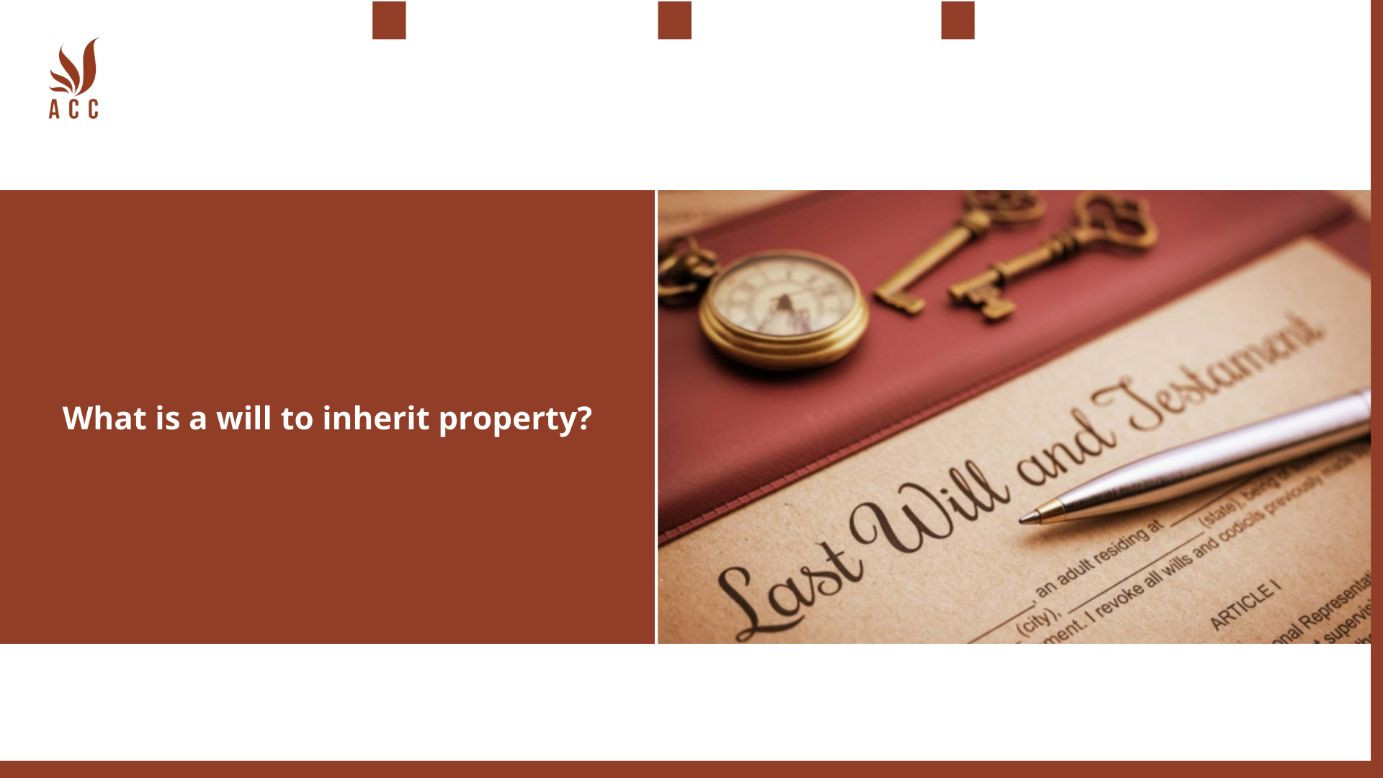
A "last will and testament" or simply a "will" is a legal document that allows an individual (the testator) to specify how they want their assets, including real property (land and real estate), to be distributed after their death. This document outlines the testator's wishes regarding the inheritance of property and assets and designates beneficiaries who will receive specific portions of the estate.
Here's how a will functions in the context of inheriting property:
1. Property Distribution:
In a will, the testator can outline precisely how they want their property to be distributed among beneficiaries. This can include specifying which individuals or entities will inherit specific parcels of real estate or other types of property.
2. Executor's Role:
The will often appoints an executor, also known as a personal representative, who is responsible for carrying out the testator's wishes, including the distribution of property. The executor ensures that the property is transferred to the designated beneficiaries as instructed in the will.
3. Legal Formalities:
To be valid, a will must meet certain legal formalities, including proper execution (signature) by the testator and the presence of witnesses in accordance with local laws and regulations.
4. Property Title and Deeds:
For real property, it's essential to ensure that property titles and deeds are properly updated to reflect the changes in ownership as specified in the will. This typically involves legal processes such as probate.
5. Challenges and Disputes:
In some cases, the distribution of property through a will may be challenged or disputed by interested parties. Legal proceedings may be necessary to resolve these issues.
6. When using ACC Law Firm's testament, entrepreneurs will receive
7. Q&a
Q1: What is a "will to inherit property"?
A1: A "will to inherit property" is not a standard legal term. However, it appears to refer to a last will and testament, which is a legal document used for estate planning that outlines how a person's assets and property should be distributed after their death.
Q2: How does a last will and testament relate to the inheritance of property?
A2: A last will and testament is a legal document that allows an individual (the testator) to specify how their property and assets should be distributed among heirs, beneficiaries, or other recipients upon their death. It provides instructions for the inheritance of property.
Q3: Can a person use a will to inherit property to name specific beneficiaries for their assets?
A3: Yes, in a last will and testament, a person can name specific beneficiaries or heirs to inherit their property. They can specify which individuals or entities should receive particular assets or portions of their estate.
Q4: Are there legal requirements for creating a valid will to inherit property?
A4: Yes, there are legal requirements for creating a valid will to inherit property. These requirements can vary by jurisdiction but often include the need for the testator to be of sound mind, proper execution of the document, and the presence of witnesses who attest to the testator's signature. It's essential to adhere to these legal requirements to ensure the validity of the will.
Nội dung bài viết:





Bình luận