



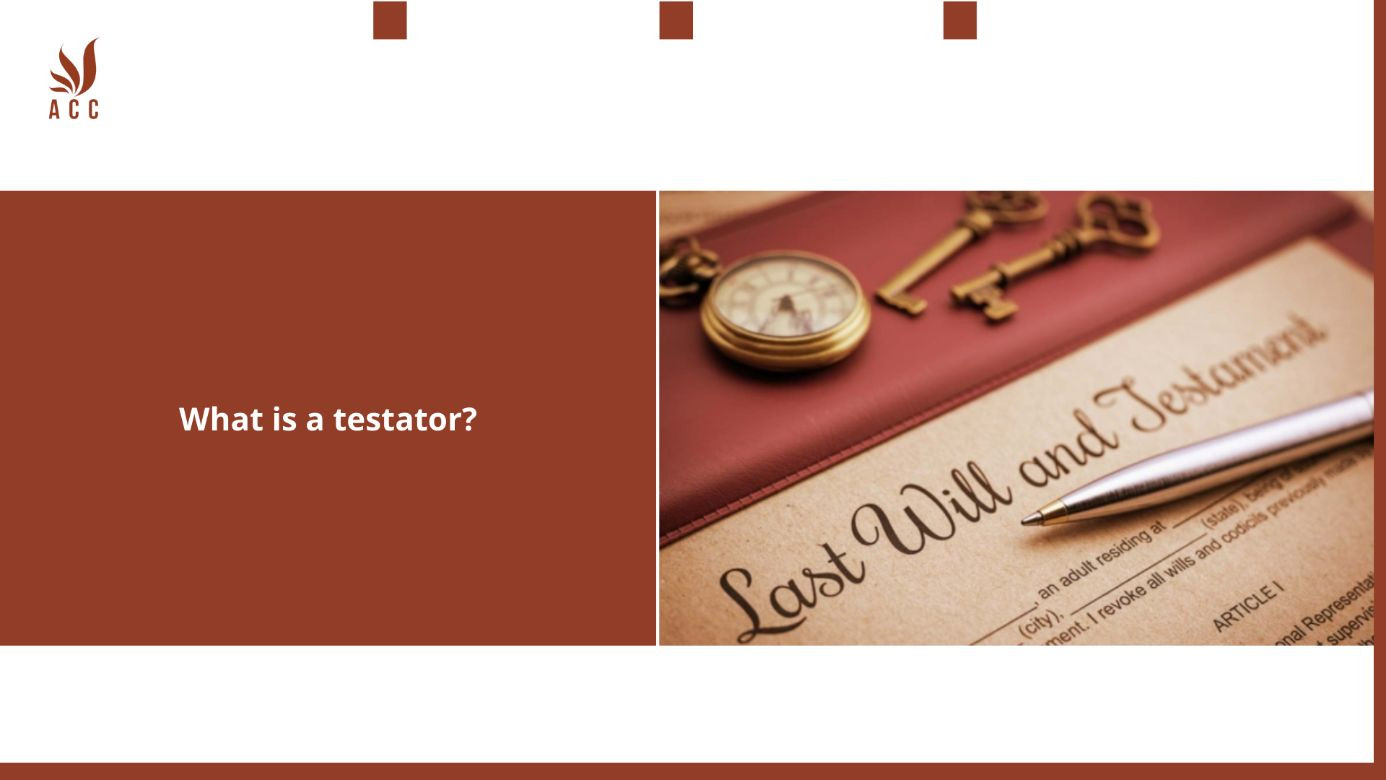
A testator is a legal term referring to a person who has created and executed a last will and testament. The testator is the individual who makes the will to specify how they want their property and assets to be distributed after their death. In the context of estate planning and wills, the testator plays a central role in expressing their wishes and ensuring that their instructions are legally carried out.
Key responsibilities and roles of a testator include:
1. Creating the Will:
The testator is responsible for drafting or having a will prepared that outlines how their assets, property, and possessions should be distributed among beneficiaries or heirs.
2. Naming Beneficiaries:
The testator designates who will receive their assets, whether they are family members, friends, charities, or other individuals or entities.
3. Appointing an Executor:
The testator typically appoints an executor in the will. The executor is responsible for managing the estate, settling debts, and ensuring that the testator's wishes are carried out.
4. Making Specific Bequests:
The testator can make specific bequests or gifts of particular assets or property to specific individuals or organizations.
5. Stating Funeral and Burial Wishes:
A will can include instructions regarding the testator's funeral and burial arrangements, although these instructions may not be legally binding in all jurisdictions.
6. Revoking or Amending the Will:
The testator has the right to revoke or amend their will at any time while they are of sound mind and capacity.
Upon the testator's death, the will is submitted to the probate court, where its validity is verified, and the instructions within the will are carried out during the probate process.
7. When using ACC Law Firm's testament, entrepreneurs will receive
8. Q&a
Q1: What is a testator?
A1: A testator is an individual who has created and executed a legally valid will, which is a legal document that outlines their wishes regarding the distribution of their assets and the appointment of guardians for minor children or dependents upon their death.
Q2: What role does a testator play in the legal process of estate planning?
A2: The testator plays a central role in estate planning by making important decisions about how their property and assets will be distributed after their death. They also name an executor or personal representative in the will to ensure that their wishes are carried out.
Q3: Can anyone be a testator, or are there specific legal requirements?
A3: Generally, anyone who is of sound mind and legal age (usually 18 or older) can be a testator. However, there are specific legal requirements for creating a valid will, such as the need for witnesses and proper execution, which must be adhered to for the will to be legally enforceable.
Q4: What happens if a person passes away without being a testator or creating a will?
A4: If a person passes away without being a testator or creating a will, they are said to have died "intestate." In such cases, their estate will be distributed according to the laws of intestacy in their jurisdiction, which may not align with their personal wishes and preferences.
Nội dung bài viết:





Bình luận