



I. The testator requested
When referring to the testator's requests or wishes in the context of a will, it's essential to be specific and clear about what those requests entail. The testator's requests typically pertain to how they want their assets and property to be distributed among their beneficiaries. Here's an example of how you can phrase the testator's requests in a will:
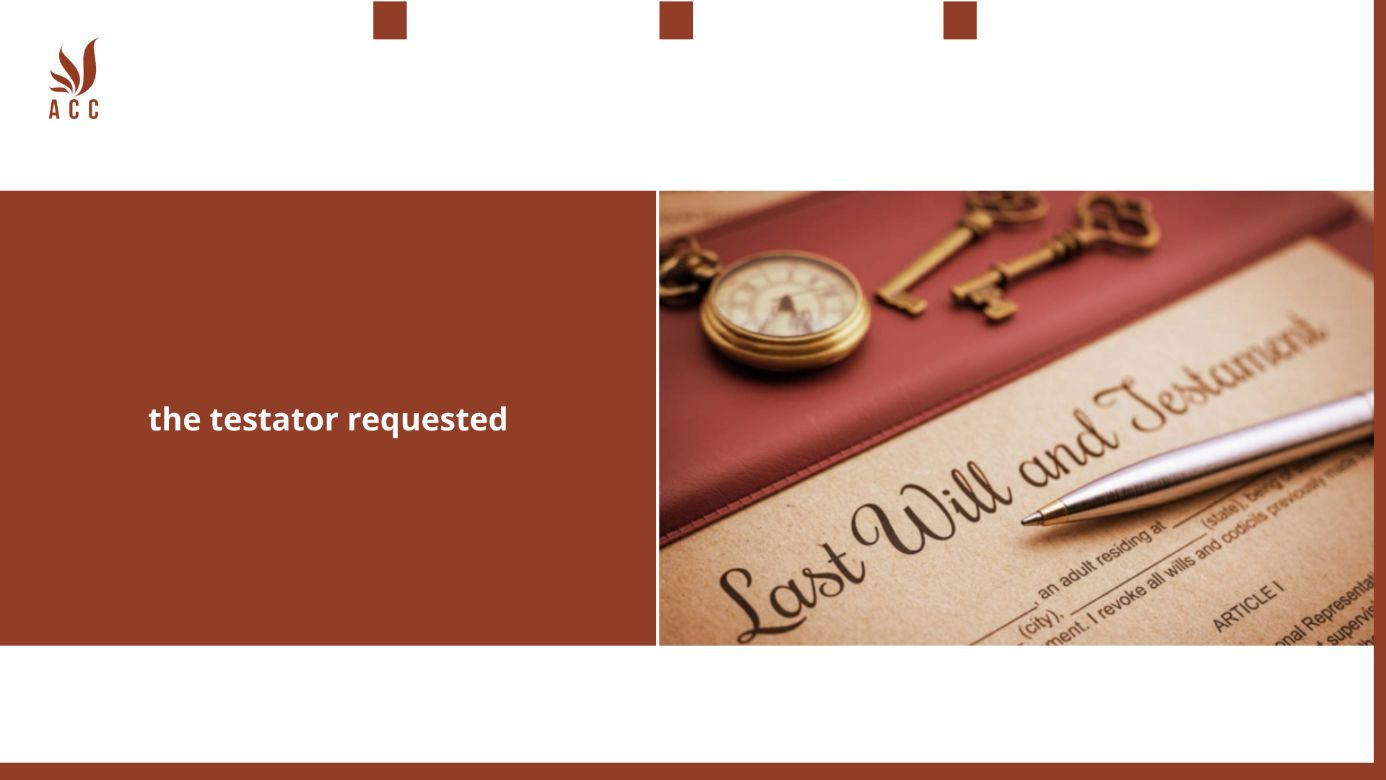
"I, [Testator's Full Name], hereby request and direct the following regarding the distribution of my assets and property upon my death:
[Specific Request 1]: I request that my real estate property located at [Property Address] be bequeathed to [Beneficiary's Full Name].
[Specific Request 2]: I request that my financial assets, including [Account Numbers], be distributed to [Beneficiary's Full Name] in equal shares.
[Specific Request 3]: I request that my personal belongings, including [Description of Items], be gifted to [Beneficiary's Full Name]."
In a will, the testator's requests are typically outlined in detail, specifying the beneficiaries and the assets or property they are to receive. It's crucial to be precise and clear to ensure that the testator's wishes are carried out as intended. These requests form the core of the will's instructions for the distribution of the estate.
7. When using ACC Law Firm's testament, entrepreneurs will receive
When using ACC Law Firm's testament, entrepreneurs will receive professional legal advice and assistance in drafting a comprehensive and legally binding will that reflects their specific business needs and objectives. The testament will ensure the smooth transition of their business assets and help protect their interests and those of their beneficiaries. Additionally, entrepreneurs will have access to ongoing support and guidance from experienced attorneys who specialize in estate planning for entrepreneurs.
8. Q&a
Q1: What does it mean when the testator has requested something in their will?
A1: When the testator has requested something in their will, it means that they have included specific instructions, wishes, or bequests in their last will and testament regarding how their assets, property, or belongings should be distributed or managed after their death.
Q2: Can the requests made by the testator in their will be legally binding?
A2: The requests made by the testator in their will can be legally binding, provided that the will complies with the legal requirements of the jurisdiction in which it is created. To be legally binding, the will typically needs to meet certain formalities, such as proper signing and witnessing, and must not be in violation of applicable laws. When a will is deemed valid, the requests and instructions contained within it are legally enforceable.
Q3: What types of requests can a testator include in their will?
A3: A testator can include various types of requests in their will, including but not limited to:
- Bequests: Specific gifts of money, property, or belongings to individuals, charities, or organizations.
- Appointment of Executors and Trustees: Naming individuals responsible for managing and distributing assets.
- Guardianship: Designating guardians for minor children or dependents.
- Funeral and Burial Requests: Expressing preferences for funeral arrangements or final resting places.
- Special Instructions: Providing guidance on how specific assets or properties should be managed or distributed.
The range of requests can be extensive and should reflect the testator's intentions and wishes.
Q4: Can the testator's requests in their will be challenged or contested?
A4: Yes, the testator's requests in their will can be challenged or contested under certain circumstances. Common reasons for contesting a will include allegations of undue influence, lack of mental capacity at the time of creating the will, fraud, forgery, or disputes among potential beneficiaries. Challenges to a will are typically resolved through legal proceedings, and the outcome depends on the evidence and arguments presented. To minimize the risk of challenges, it's essential for the testator to create a clear and legally valid will and, if necessary, consult with an attorney experienced in estate planning.
Nội dung bài viết:





Bình luận