



I. Sample will and legacy of worship
Certainly, here's a sample clause for leaving a legacy of worship or support for a religious institution in your will:
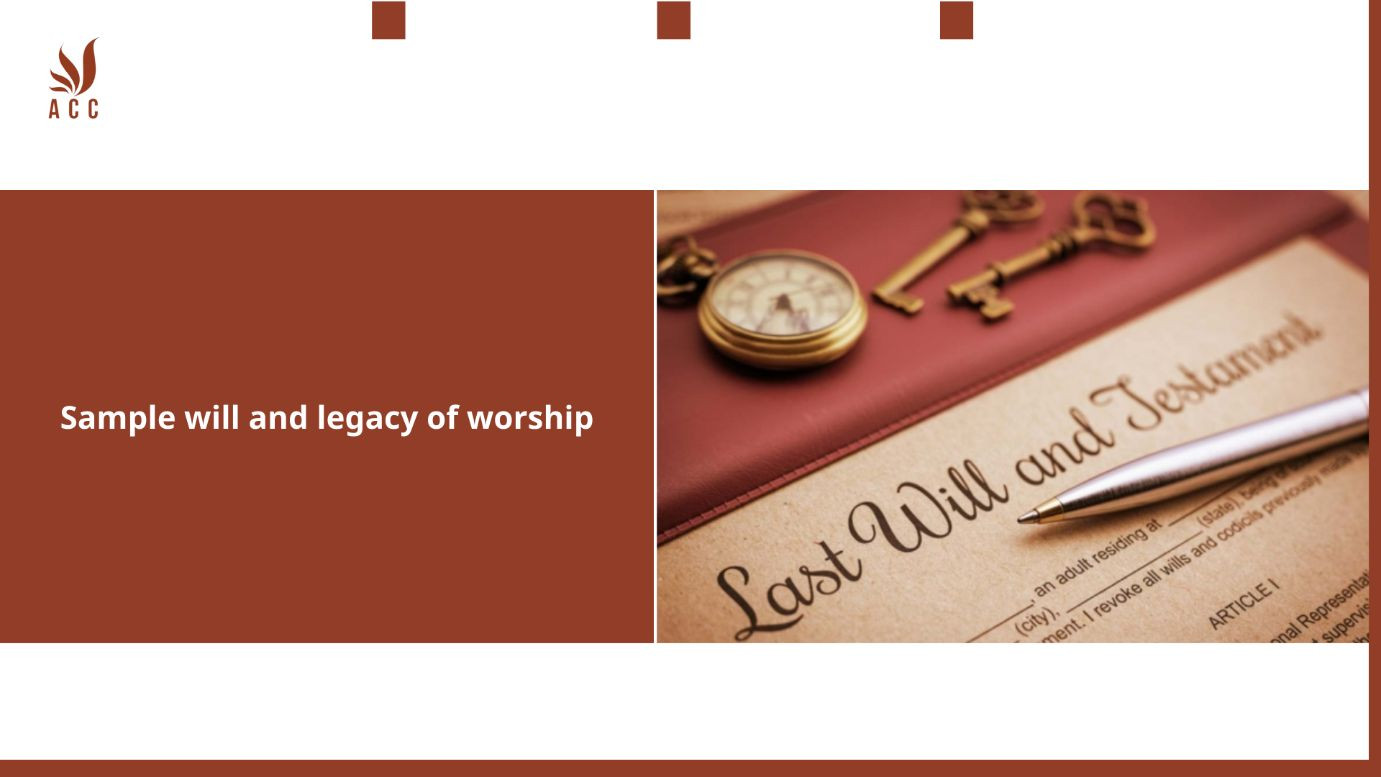
Article IV: Legacy of Worship
I have always held my faith and spirituality close to my heart. To perpetuate my devotion and to support the religious institution that has played a significant role in my life, I hereby bequeath the sum of [Specify Amount or Description of Asset] to [Name of Religious Institution], located at [Address of Religious Institution].
I trust that this legacy will be used by [Name of Religious Institution] to further their religious and charitable activities, support their mission, and enhance the worship experiences of their congregation.
It is my hope that this contribution will continue to foster spiritual growth, compassion, and community among the members of [Name of Religious Institution], and that it will serve as a lasting tribute to my faith and dedication.
II. When using ACC Law Firm's testament, entrepreneurs will receive
When using ACC Law Firm's testament, entrepreneurs will receive professional legal advice and assistance in drafting a comprehensive and legally binding will that reflects their specific business needs and objectives. The testament will ensure the smooth transition of their business assets and help protect their interests and those of their beneficiaries. Additionally, entrepreneurs will have access to ongoing support and guidance from experienced attorneys who specialize in estate planning for entrepreneurs.
III. Q&A
Question 1: Can I include provisions in my will for a legacy of worship or religious contributions?
Answer: Yes, you can include provisions in your will for a legacy of worship or religious contributions. This allows you to designate a portion of your estate or specific assets to support religious organizations, places of worship, or charitable activities associated with your faith.
Question 2: What are some common ways to leave a legacy of worship in a will?
Answer: There are several common ways to leave a legacy of worship in a will:
- Charitable Bequests: Specify a portion of your estate or a specific dollar amount to be donated to a religious organization or place of worship.
- Endowment Funds: Establish an endowment fund in your will, which generates income to support religious activities or charitable endeavors over time.
- Property Donations: Leave property, such as real estate or valuable assets, to a religious institution or organization.
- Scholarship Funds: Create a scholarship fund to provide educational opportunities for individuals pursuing religious or spiritual studies.
- Support for Ministries: Allocate funds to support specific religious ministries, missions, or outreach programs.
Question 3: Can a legacy of worship in a will be contested?
Answer: A legacy of worship in a will can potentially be contested, like any other provision in a will. Beneficiaries or interested parties may challenge the legacy on grounds such as lack of testamentary capacity, undue influence, or improper execution of the will. To minimize the risk of contests, it's important to ensure that your will is legally sound, clear in its intentions, and created with proper legal advice. Additionally, clearly documenting your wishes and the reasons behind your legacy can help support its validity.
Question 4: What steps should I take to ensure that my legacy of worship in my will is carried out as intended?
Answer: To ensure that your legacy of worship in your will is carried out as intended:
-
Consult with Legal and Religious Advisors: Seek guidance from an attorney with experience in estate planning and consider consulting with religious advisors or leaders who can provide insight into your faith's practices and needs.
-
Clearly Define Your Intentions: Specify in your will the details of your legacy, including the recipient or organization, the purpose of the legacy, and any conditions or restrictions.
-
Name an Executor: Appoint an executor who is knowledgeable about your religious beliefs and practices to oversee the distribution of your legacy.
-
Regularly Review Your Will: Periodically review and update your will to ensure it reflects your current intentions and financial situation.
-
Communicate Your Wishes: Discuss your legacy plans with family members and beneficiaries to ensure they are aware of your intentions and to manage expectations.
Nội dung bài viết:





Bình luận