



The regulations on writing wills vary from one jurisdiction to another, but there are some common principles and requirements that generally apply. Here are typical regulations and guidelines for writing wills:
1. Legal Age and Capacity:
The testator (the person making the will) must generally be of legal age (usually 18 or older) and have the mental capacity to understand the nature and consequences of making a will. This means the testator must be of sound mind when creating the will.
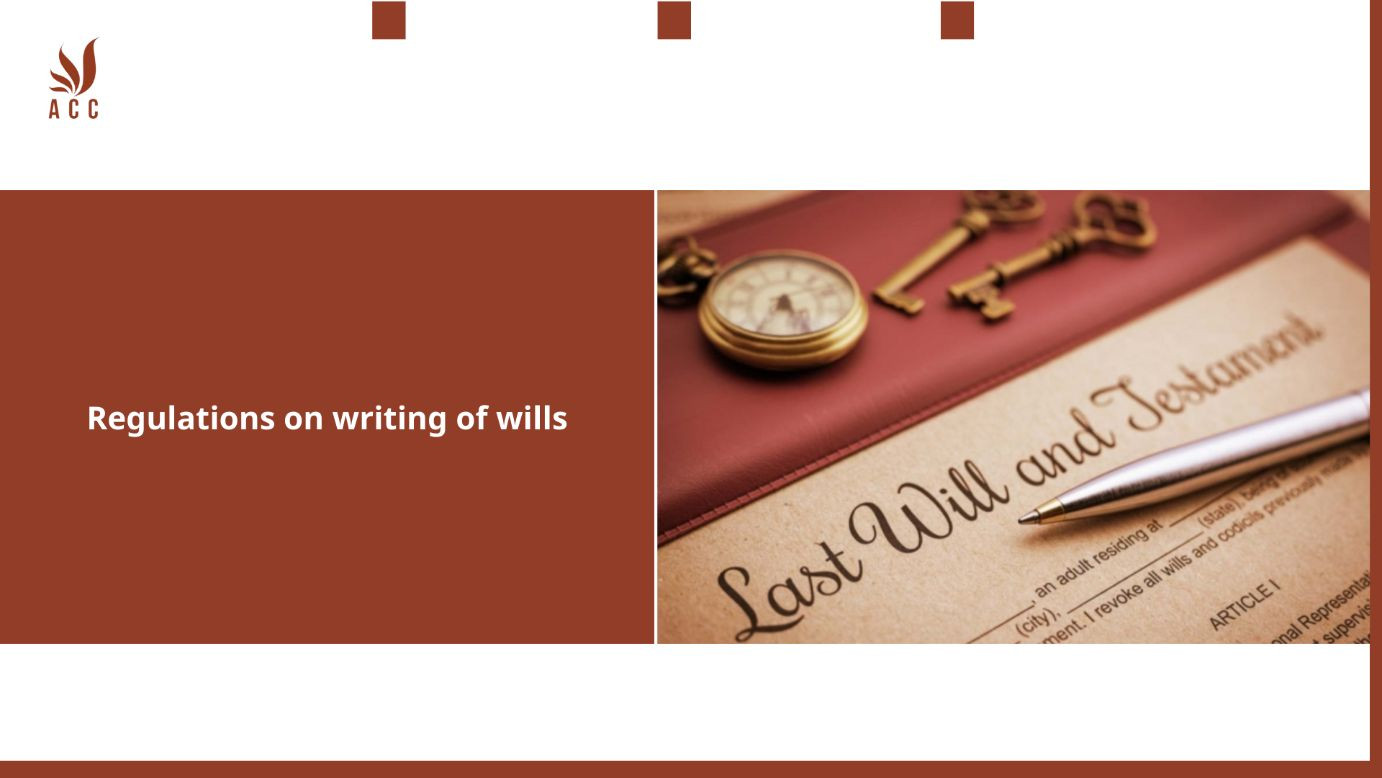
2. In Writing:
Most jurisdictions require that a will must be in writing, whether it's handwritten (holographic), typed, or printed. Oral wills, except in very limited circumstances, are usually not accepted as valid.
3. Signature:
The will should be signed by the testator at the end of the document. Some jurisdictions may accept electronic signatures, but this can vary. The testator's signature should be made with the intention of giving effect to the will.
4. Witnesses:
Many jurisdictions require the will to be witnessed by one or more individuals who are not beneficiaries and who meet specific criteria, such as being of legal age and having mental capacity. Witnesses are usually required to sign the will to attest to its authenticity.
5. Date:
The will should include the date when it was signed by the testator. This helps establish the document's timeliness and can be important if multiple wills exist.
6. Revocation Clause:
A well-drafted will often includes a clause explicitly revoking any prior wills and codicils (amendments to the will) to avoid confusion.
7. Executor:
The testator may designate an executor (also known as a personal representative) in the will. This person is responsible for carrying out the instructions in the will, managing the estate, and handling any legal and financial matters.
8. When using ACC Law Firm's testament, entrepreneurs will receive
9. Q&a
Q1. What are the regulations regarding the writing of wills?
The regulations regarding the writing of wills vary by jurisdiction, but some common requirements and principles typically include:
- The testator (person making the will) must be of legal age and sound mind.
- The will must be in writing, either typed or handwritten, depending on local laws.
- The document should clearly identify itself as a last will and testament.
- The testator must sign the will, and it may require witnesses' signatures.
- Witnesses must be disinterested parties, meaning they are not beneficiaries.
- Some jurisdictions may require notarization or other formalities.
These regulations are designed to ensure the validity and enforceability of the will.
Q2. Can a will be handwritten, or must it be typed?
In many jurisdictions, a will can be handwritten, known as a holographic will, as long as it meets certain requirements. These requirements may include the entire document being in the testator's handwriting, clear expression of the testator's intent, and, in some cases, the date of execution. However, not all jurisdictions accept holographic wills, so it's crucial to check local laws.
Q3. What role do witnesses play in the writing of a will?
Witnesses play a significant role in the writing of a will by providing testimony to its validity. They typically attest to the testator's signing of the will and, in some cases, may confirm that the testator was of sound mind at the time. Witnesses should be disinterested parties, meaning they have no personal interest in the distribution of the estate. Their presence helps prevent fraud or undue influence.
Q4. Can regulations on the writing of wills change over time or vary by location?
Yes, regulations on the writing of wills can change over time, and they often vary by location. Each jurisdiction may have its own laws and requirements governing wills and estate planning. It's essential to stay informed about the current regulations in your area or seek legal advice when creating or updating a will to ensure compliance with local laws and to meet your specific needs and circumstances.
Nội dung bài viết:





Bình luận