



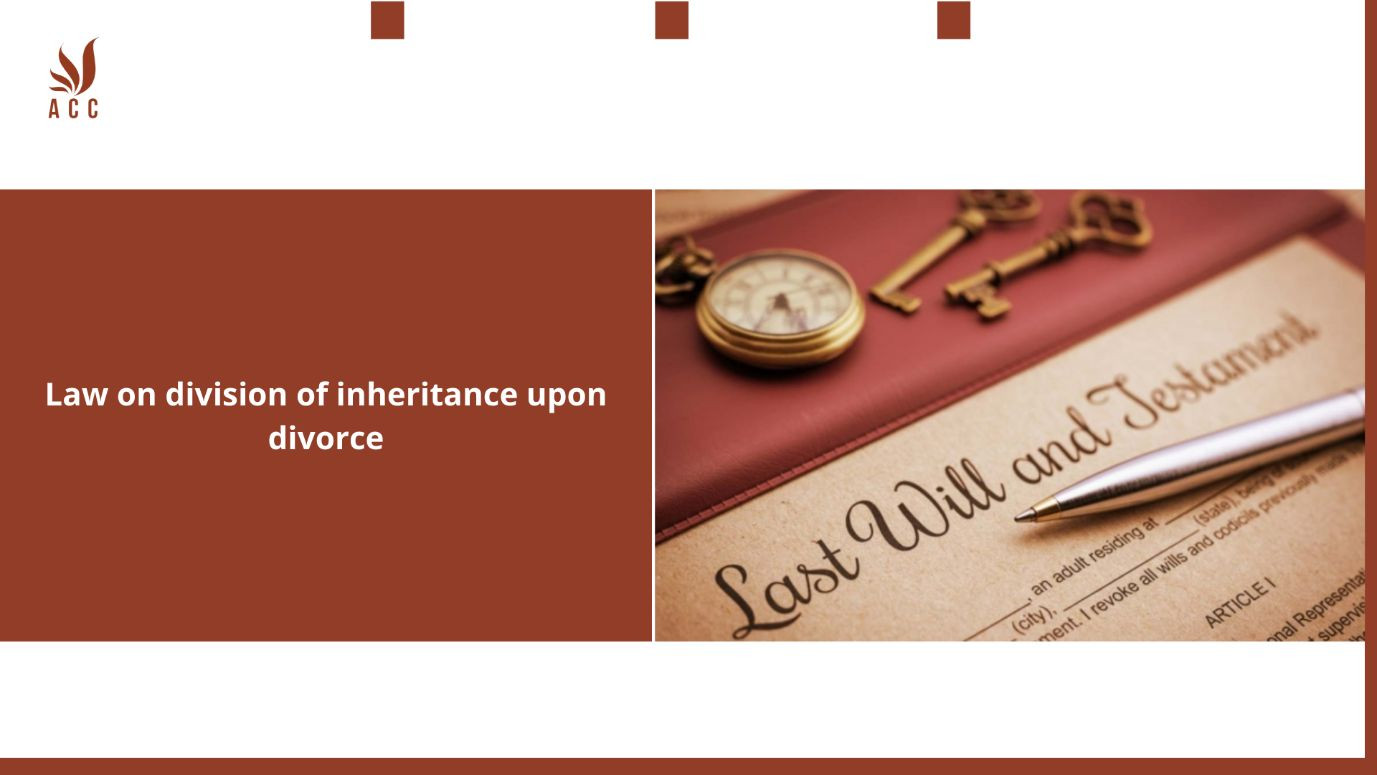
In divorce, disputes can arise over a spouse's claim to the other spouse's inheritance during the marriage. During the marriage, one spouse may inherit money or property. Even with an inheritance before marriage, inherited money can get mixed with other marital assets. This article addresses some common legal situations with inherited assets and divorce.
1. Navigating Inheritance Division in Divorce: Legal Principles and Considerations
During a divorce, separating spouses divide marital property. State law dictates the division of property during divorce proceedings. A primary consideration in property division is the classification of assets as marital or separate. Generally, any asset acquired during the marriage is marital property regardless of which spouse's name is on the title. Assets acquired by either spouse before the marriage are separate property. Questions of ownership arise when couples use separate property as a joint asset.
Community property states divide the marital estate evenly. Equitable distribution states divide marital assets according to what is "fair." This means that the equitable division of assets may not be equal.
2. When Is My Inheritance Separate Property?
Whether a gift or inheritance is separate or shared is very fact specific. Courts may treat inheritance and gifts differently in different situations. If you have concerns about inherited property in a divorce, seek legal advice from an experienced family law attorney.
3. Inheritance During Marriage: Basics
As a general rule, inheritances are not subject to property division in divorce. This is because inheritances are not considered marital property. Instead, inheritances are separate property belonging to the person who received the inheritance. Separate property is not divided in a divorce.
Courts treat an inheritance shared between spouses differently. Each state has rules that vary significantly among the states. For example, suppose you deposit inherited funds into a joint bank account. Then you use that bank account for common marital assets. This is the "commingling" of the inheritance. In that case, the inheritance can lose its status as separate property. Transmutation is when separate property turns into marital property or vice versa. If courts have difficulty classifying the funds in an account as separate or marital funds, they are likely marital.
Similarly, if you use the inherited funds to improve joint real estate, they may also lose their separate status.
4. Inheritance Acquired Before the Marriage
Sometimes, spouses enter into a marriage with some prior wealth from an inheritance. State divorce laws determine how courts treat an inheritance acquired before the marriage.
Sometimes the best way to safeguard pre-marital assets is to enter a prenuptial ("prenup") or postnuptial agreement. A prenuptial agreement is created before the marriage, while a postnuptial is made any time after the marriage. These agreements identify ownership of pre-marital assets and the treatment of future inheritance.
Suppose you keep the property separate, under a separate title, or in a separate account. In that case, the property should continue to maintain separation. Without commingling, the inheritance is generally separate property. The person who received it may keep all the funds associated with it in the event of a divorce.
5. Gifts During the Marriage
Gifts given to one spouse during the marriage are generally treated in the same way as an inheritance. If a third party gives a gift to only one spouse, the spouse maintains the gift as separate property in a divorce. If the gift is commingled with joint assets, it may lose separate property status in a divorce.
6. Get Legal Help Working Through Inheritance and Divorce Issues
Inheritance laws can be tough to understand, especially in the context of a divorce. Suppose you want to know more about inheritance and divorce. In that case, you should contact a skilled divorce attorney to discuss your situation. A divorce lawyer can guide you through the divorce process and give advice based on your situation.
7. Why should professionals use ACC Law Firm's divorce Service?
-
Legal Expertise: ACC Law Firm specializes in family and divorce law, ensuring that professionals receive expert legal guidance and support throughout the divorce process.
-
Customized Solutions: Each divorce case is unique, with its own set of circumstances and challenges. ACC Law Firm tailors its services to meet the specific needs and goals of professionals, ensuring the best possible outcome.
-
Legal Compliance: Divorce involves numerous legal requirements and paperwork. ACC Law Firm ensures that all documentation is completed accurately and submitted on time, preventing potential delays or legal issues.
-
Objective Advice: Emotions often run high during divorce proceedings. ACC Law Firm's legal professionals provide objective advice and a calm, rational perspective, helping professionals make sound decisions in the midst of emotional turmoil.
-
Conflict Resolution: Divorce can be contentious, but ACC Law Firm is experienced in conflict resolution. They work to minimize disputes through negotiation, mediation, and alternative dispute resolution methods, reducing the need for costly litigation.
Q&A
Question 1: How is inheritance typically treated in divorce proceedings?
Answer 1: Inheritance is generally considered separate property in divorce proceedings, which means that it is typically not subject to division between the spouses. However, there are exceptions depending on the jurisdiction and how the inheritance was handled during the marriage.
Question 2: Are there circumstances in which inherited assets can become subject to division in a divorce?
Answer 2: Yes, there are circumstances in which inherited assets may be subject to division in a divorce. For example, if inherited funds were commingled with marital assets, used for the benefit of both spouses, or contributed to the marital home, they may be considered marital property and subject to division.
Question 3: How do courts typically determine the treatment of inheritance in a divorce?
Answer 3: Courts generally consider the following factors when determining the treatment of inheritance in a divorce:
- Whether the inheritance was kept separate or commingled with marital assets.
- How the inheritance was used during the marriage.
- Applicable state laws and legal precedent in the jurisdiction.
- Whether the parties had a prenuptial or postnuptial agreement that addresses inheritance.
Question 4: Is it advisable to consult with an attorney to navigate the division of inheritance in a divorce?
Answer 4: Yes, it is advisable to consult with an experienced family law attorney when dealing with the division of inheritance in a divorce. An attorney can help you understand the laws in your jurisdiction, protect your rights, and ensure that the division of assets, including any inherited assets, is handled in a way that is fair and legally compliant.
Nội dung bài viết:





Bình luận