



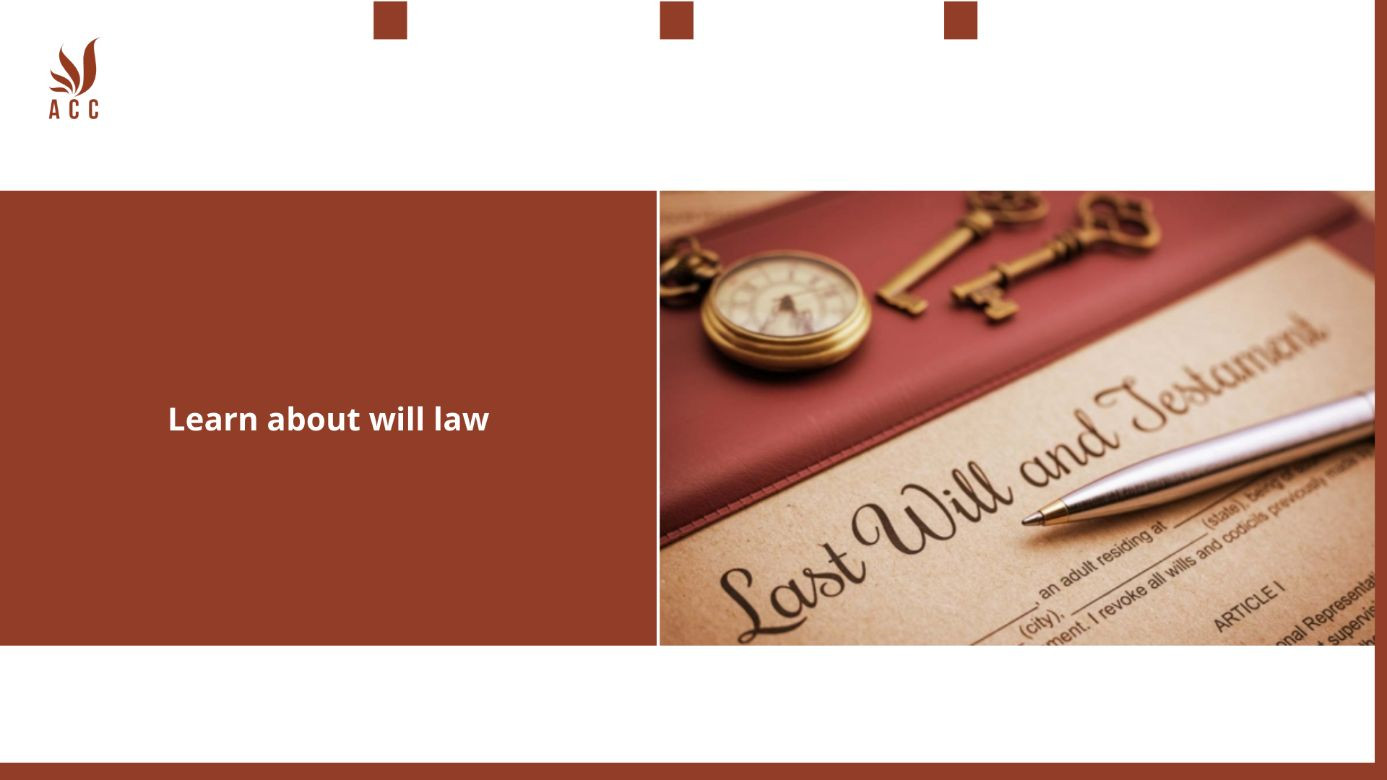
A will, also known as a last will and testament, is a legal document that outlines a person's wishes regarding the distribution of their assets and the care of their dependents after their death. Will law encompasses the rules and regulations that govern the creation, execution, and interpretation of these documents. Here are some key aspects of will law:
1. Testator:
The person who creates the will is called the "testator" or "testatrix" if female. To create a valid will, the testator must generally be of sound mind and legal age (usually 18 or older).
2. Executor:
The testator appoints an executor in the will. This is the person responsible for carrying out the wishes expressed in the will, including the distribution of assets and payment of debts and taxes.
3. Beneficiaries:
Beneficiaries are the individuals or organizations named in the will to receive the testator's assets, such as money, property, or personal belongings.
4. Guardianship:
In a will, a testator may also designate a guardian for their minor children or dependents, specifying who will be responsible for their care and upbringing in the event of the testator's death.
5. Witnesses:
Most jurisdictions require wills to be witnessed by disinterested parties (individuals who are not beneficiaries) to ensure the document's authenticity and that the testator signed it willingly.
6. Probate:
After the testator's death, the will typically goes through a legal process called probate. During probate, the court validates the will, oversees the distribution of assets, and ensures that the testator's debts and taxes are paid.
7. Intestacy:
If a person dies without a valid will, they are said to have died "intestate." In such cases, the distribution of assets is determined by the laws of intestacy in the jurisdiction, which may not align with the deceased's wishes.
8. Challenges to Wills:
In some situations, interested parties may contest the validity of a will. Common grounds for contesting a will include claims of undue influence, fraud, lack of capacity, or improper execution.
9. When using ACC Law Firm's testament, entrepreneurs will receive
10. Q&a
What is a will, and why is it important in the context of law?
A will is a legal document that outlines a person's wishes regarding the distribution of their assets and the care of their dependents after their death. It is important in law because it provides a clear and legally binding way to ensure that a person's wishes are followed, thus preventing disputes and ensuring a smooth transfer of assets to heirs and beneficiaries.
What are the essential elements of a valid will?
For a will to be valid, it typically must meet several key requirements, including:
Testamentary Capacity: The person making the will (the testator) must be of sound mind and understand the nature of their actions.
Intent: The testator must have the intention to create a will and dispose of their assets.
Signature: The will usually needs to be signed by the testator, often in the presence of witnesses.
Witnesses: Many jurisdictions require the presence of witnesses who can attest to the testator's signing and mental capacity.
Beneficiary Designation: The will should clearly identify who will receive the testator's assets.
What happens if someone dies without a valid will?
When a person dies without a valid will (intestate), the distribution of their assets is determined by the laws of intestacy in their jurisdiction. Typically, this means that assets are distributed to close family members, such as spouses, children, or parents, in a predefined manner. The specifics can vary by jurisdiction, but it may not align with the deceased's wishes.
Can a will be contested in court?
Yes, a will can be contested in court under certain circumstances. Common reasons for contesting a will include claims of undue influence, fraud, lack of testamentary capacity, or improper execution. Those who wish to contest a will must typically have standing (a legal right to challenge it) and must provide evidence to support their claims. The court will then decide whether the will is valid or if it should be modified or invalidated.
Nội dung bài viết:





Bình luận