



If you've studied digital marketing, you've probably heard the term "SEO" before. But what is it and why is SEO important for businesses? How can SEO help your business?
1. What is search engine optimization?
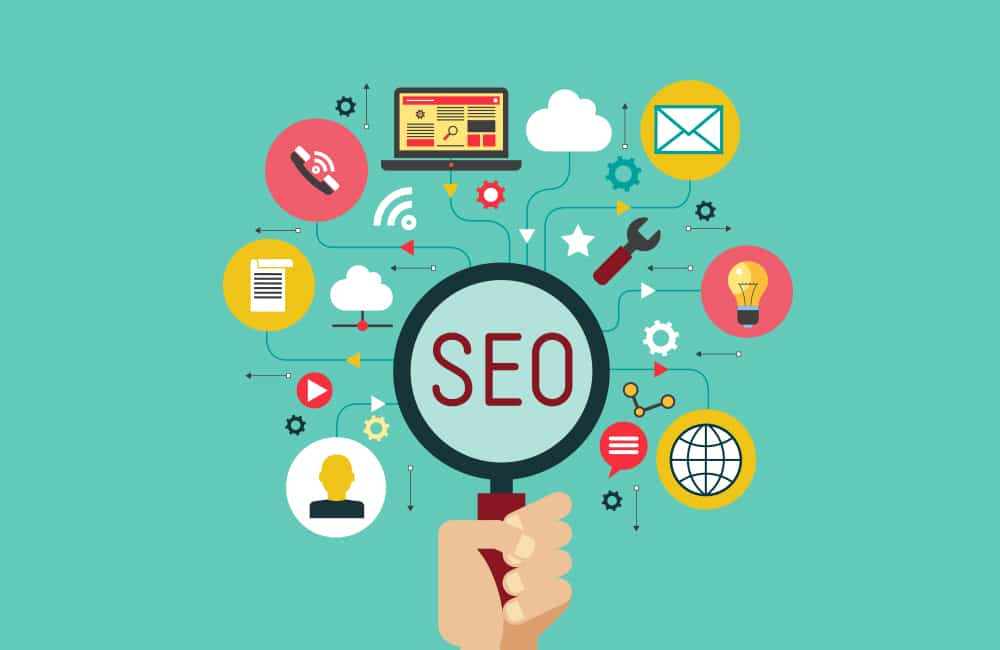
Search engine optimization (SEO) is the activity of getting your website to appear higher on the search engine results pages (SERPs) to increase traffic. When entering a search query or searching for a product on a search engine like Google, most people only look at the first page and don't bother browsing the other pages. They want instant answers, and they want them on the first page.
In order to get proper traffic to your website, you need an effective SEO strategy to ensure your website appears in the top 3 results or at least on the first page of the search results page. The SEO process is tedious and time-consuming, so many people tend to stay away from it.
However, it is an important part of a digital marketing strategy. But don't worry if you're new to SEO, many businesses, large and small, hire digital marketing agencies that offer SEO services to handle SEO for them.
2. Why is SEO important for business?
SEO helps your website rank high in SERPs, which leads to more website traffic and business promotion.
Still wondering "How important is SEO for a business?" Let's break down some stats:
- An estimated 71% of search traffic comes from the first page of Google, with 28.5% of clicks going to the first search result.
- The top 5 results on the SERP get 67.6% of the clicks, while the remaining 5 results get only 3.73%.
- Also, the second page of Google SERPs gets only 6% of all website traffic.
This is why SEO is important for your business.
3. Benefits of SEO for Business
SEO offers many advantages to your company's online presence. Especially when it comes to your website and incoming traffic. Some key advantages are:
3.1. Provide long-term results
Improved website rankings due to SEO don't happen overnight. Achieving consistent success with SEO takes time and dedication. But once the ranking improves, it has a good chance of staying ahead. With SEO, the long-term gains can pay off hugely – increasing traffic levels means bigger profits later!
3.2. Bring higher visibility
Achieving higher rankings in SERPs can increase your website's visibility and credibility. This leads to more potential customers visiting your website, who are more likely to be interested in what you have to offer.
3.3. Increase your website's credibility
By ranking on the first page of Google, you can convince customers that your business is one of the best in the business. The Google search engine doesn't suddenly rank websites. They take into account factors such as ratings, bounce rate, and traffic. Landing at the bottom of search engine results can make it harder for customers to trust your business. They may perceive you as lacking expertise in the industry and may reconsider doing business with you.
3.4. Increase organic traffic
With the help of SEO, the higher your website ranks, the more traffic you will get on your website. This traffic comes directly from search engines and is independent of other marketing tactics such as social media campaigns. This means that people search for solutions in search engines and think that your company might be the ideal solution for them.
3.5. Optimize your customers' website experience
Optimizing your website for customers can also help make your website easier to navigate. Good navigation helps guide your customers to the right product or service. If your website looks good, your customers are more likely to stay on your page. With 66% of web traffic today coming from mobile devices, it's important to optimize your website for both desktop and mobile.
3.6. Create synergies across digital marketing channels
Combining SEO with other digital marketing channels such as pay-per-click (PPC), email marketing, or social media marketing can create a comprehensive marketing strategy for your business. Marketing channels like PPC, email, and social media can be combined with SEO to help both channels. For example, it has been found that people who visit your website via email are more likely to engage with your website, reducing your bounce rate.
4. What is the most important aspect of SEO?
To understand the purpose of search engine optimization, let's look at the three main aspects of SEO: on-page SEO, off-page SEO, and technical SEO.
4.1. On-page SEO
On-page SEO refers to optimizing your website so that search engines can "crawl" and better understand your website structure.
On-page SEO (or on-site SEO) includes keyword research, title tag optimization, meta tags, images, titles, URL structure, content improvement, and more.
On-page refers to the posts or content on your webpage and how it can help you rank higher in search engine results pages (SERPs). This is where you perfect your content, making sure you include all the keywords, the right information, the right structure and all the good stuff that really makes your site better than many other similar sites.
Keywords – Keywords or key phrases are phrases related to your content that people are most likely to type into search engines. The more relevant keywords you have on your page, the better your chances of ranking #1 in SERPs. That's how important SEO is to a business.
Keyword Optimization – Keyword optimization involves researching, selecting and using the right keywords to increase your chances of getting more clicks and organic traffic to your website.
Content Enhancement - Content refers to the text, photos, videos, etc. posted on your website. To make sure people click through to your site and stay longer, you need to provide them with relevant and engaging content.
Copywriting - Copywriting is the use of keywords and content in SEO to entice users to click on your website. When your content is engaging, relevant, useful and informative, you are more likely to receive clicks and organic traffic.
Image Optimization - To ensure that web users click, enjoy, and stay on your site, you also need to provide high-quality images in the correct format. To ensure image optimization, you need to make sure you resize or compress images so they load quickly, use the correct image format (PNG, JPG, SVG, etc.), and more.
On-site SEO focuses on all of this and more to increase your chances of ranking higher in the SERPs.
4.2. Business off-page SEO
Simply put, off-page (or off-page) SEO is the steps taken outside of your website to rank higher. Off-page SEO helps validate your website for search engines. If your off-page SEO is effective in demonstrating the importance of your website, search engines may rank your website higher or highlight it.
Remember, other sites are raving about your site. Off-page SEO plays a key role in promoting your website to new users on the web.
Off-page SEO is all about backlinks. Backlinks are links from other websites pointing to your website. Still confused? If the blog posts "Top 10 Local Businesses" and mentions your business along with a link to your website, that's your backlink. The more relevant and authoritative your website is, the more link juice your website will receive. This helps increase the authority of your website.
Backlinks can be further divided into two categories: natural link building and manual link building.
Natural link building is when someone likes your business and speaks it out for free through your linking website.
By building links manually, you can ask other relevant websites to provide backlinks to your website.
5. Technical SEO for Business
As the name suggests, it refers to the technical aspects of SEO. Technical SEO helps improve the technical or backend aspects of a website for a better website experience. Here, your focus includes page speed, page structure, indexing, crawling, tech-friendliness, and more.
Page Speed – Fast page loads are critical to reducing page exit rates. When a site takes longer than 2 seconds to load, its bounce rate increases by 53%!
Site Structure - Organizing website content to help search engines figure out which pages on your website are important.
Indexing - This is the process by which Google crawls websites to store and categorize information ready to be displayed on the SERPs. Help search engines find the right content in the right section.
Crawling - Crawling is when a search engine sends out a team of robots to "crawl" a website to find new content, such as images, videos, web pages, or documents.
Meta Tags – Determine how your website appears to visitors in the SERPs.
Mobile Friendly – Smartphones are more accessible and ubiquitous, so your website needs to be mobile-friendly in order to attract more users. These include page speed, layout, and usability, resulting in higher click-through rates and lower bounce rates. An estimated 69% of people use their smartphones to shop. Therefore, your website needs to be mobile-friendly to attract more customers and increase sales.
XML Sitemap - An XML Sitemap is a file that maps the pages of a website so that search engines can crawl them to find relevant information.
6. SEO for Local and Small Businesses
Local SEO is essential for finding local customers. This is especially useful for small businesses, businesses that don't sell internationally, businesses with offices in different locations, or businesses that simply want a larger local customer base. Local SEO targets local customers who are searching for products or services related to your business. That's why SEO is important for businesses.
Google, for example, has a "Google Index" that stores all the sites it discovers and recommends sites beyond those sites. When you publish web content, Google scans it and stores all available information in its database. An estimated 46% of people want results close to them when searching for a product or service. This happens even if they don't contain "... near (me/place)".
Local SEO helps you connect with searches in your area and be visible in local search results. Local SEO can help you increase your online presence, bring more local customers to your business, generate more website traffic and help conversions, and improve your business reputation.
Your Google My Business (GMB) profile helps Google rank your business on organic or "local pack" search pages. Local Package refers to the first 3 results that appear on the SERP that Google thinks are relevant to your search.
In your Google My Business profile, you will need to add your business name, business address, your exact location on Google Maps, your business category, your business contact number and your business website (if available if). and other information such as photos of your store, opening and closing times, and more. Filling out these criteria will make it easier for Google to suggest local web search results pages for you.
To increase your chances of appearing in local search results, you can ask more customers to rate your store's Google Places Profile. The higher your rating, the better your chances of being featured in local searches.
You can also try Facebook, Yelp, Bing Maps, and other search engines to improve your local SEO. Adding correct and consistent information (such as business name, address, phone number) will help increase your chances of ranking higher in the SERPs.
Another local SEO strategy is to use your Google My Business (GMB) to add updates and photos to drive customers to visit. Save photos, product shots, updates, and more.
Now that we've covered everything, let's revisit the importance of SEO for small businesses. Large international companies are obviously more likely to rank higher in the SERPs because they have more money and resources. This puts small or local businesses at a disadvantage. So how can SEO help your business?
It helps increase your chances of playing fair by placing your website higher in the SERPs. This is what search engine optimization is for.
7. Frequently Askes Questions
7.1. How can SEO help improve your website's visibility and attract more traffic?
SEO can help improve your website's visibility by optimizing your content for relevant keywords and phrases, building high-quality backlinks, and improving user experience on your website.
7.2. How can SEO help increase sales and revenue for your business?
By attracting more relevant traffic to your website and improving user experience, SEO can help increase conversions and sales for your business. Additionally, SEO can help you build brand awareness and establish credibility in your industry.
7.3. How does SEO compare to other marketing strategies in terms of ROI?
SEO can provide a high ROI compared to other marketing strategies. While it may take some time and effort to see results, the long-term benefits of improved visibility, increased traffic, and higher conversion rates can make SEO a cost-effective marketing strategy in the long run.
Nội dung bài viết:





Bình luận